
10 Best Vegetables to Grow in November in India
Kechuaa Organics
Seasonal Gardening · Winter Gardening
Seasonal Gardening | Winter Gardening
10 Best Vegetables to Grow in November in India
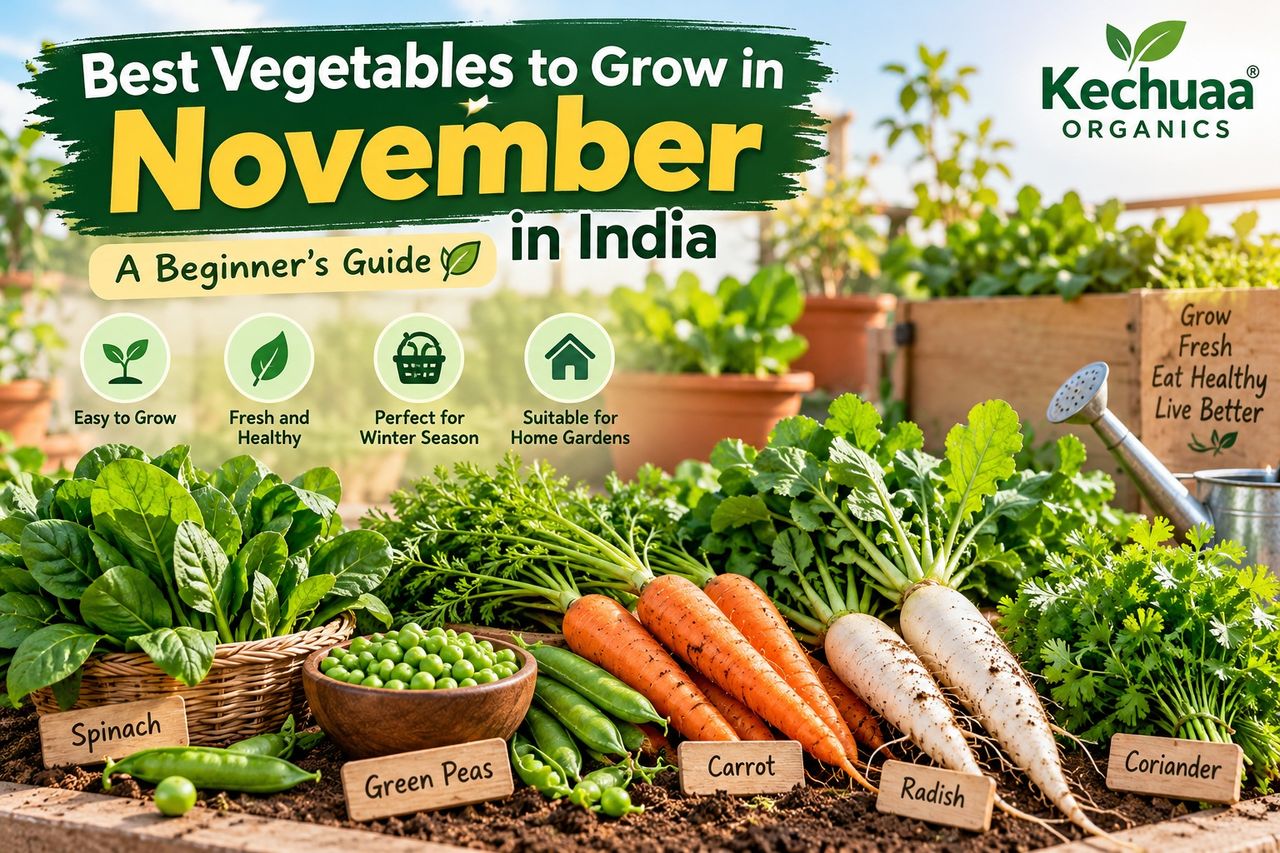
November can be a useful month to begin a winter vegetable garden in many parts of India. As temperatures become cooler in several regions, gardeners can consider leafy greens, root vegetables and other seasonal crops. The right choices depend on your local climate, the variety you select and the space available.
A selection of vegetables to consider for a November home garden.
You do not need a large farm to get started. A sunny balcony, terrace or small backyard can be enough for a few suitable crops. Begin with a manageable number of plants, observe how they respond to your local weather and adjust your care routine as they grow.
1. Spinach (Palak)
Spinach is a practical leafy green for a home garden. It can be grown in a garden bed or a wide container, and individual leaves can be harvested as the plant develops.
- Sow seeds directly in loose, well-draining soil.
- Choose a bright spot and protect young plants from unusually harsh heat.
- Keep the soil evenly moist without leaving it waterlogged.
- Harvest outer leaves carefully so the plant can continue growing.
- click here to buy seeds https://jabalpur.kechuaa.com/products/palak-seed
2. Green Peas (Matar)
Green peas are a familiar cool-season crop. Depending on the variety, plants may need a support structure as they grow.
- Sow seeds directly in the final growing space.
- Use soil that drains well.
- Provide a small trellis or support for climbing varieties.
- Keep moisture consistent, especially during flowering and pod formation.
- click here to buy seeds https://jabalpur.kechuaa.com/products/matar-seeds-green-peas
3. Carrot (Gajar)
Carrots need loose, deep soil so their roots can develop without hitting stones or compacted clumps. Direct sowing is generally preferable because the roots can be disturbed during transplanting.
- Choose a deep container or a well-prepared garden bed.
- Remove stones and break up hard soil clumps before sowing.
- Thin crowded seedlings after they emerge.
- Maintain steady moisture while the roots develop.
- click here to buy seeds https://jabalpur.kechuaa.com/products/gajar-seeds-carrot
4. Radish (Mooli)
Radish can be a good option for gardeners who want to see progress within a relatively short growing period. The exact time to harvest depends on the variety and growing conditions.
- Sow seeds directly in the bed or a suitably deep pot.
- Follow the spacing shown on the seed packet.
- Water regularly and avoid letting the soil dry out completely.
- Harvest according to the variety's recommended maturity period.
- click here to buy seeds https://jabalpur.kechuaa.com/products/mooli-seeds---radish-seeds
5. Coriander (Dhaniya)
Coriander is useful in everyday cooking and can be grown in a wide container, balcony planter or garden bed.
- Use a container with drainage holes.
- Sow seeds in loose soil and cover them lightly.
- Keep the soil lightly moist while seeds germinate.
- Pick leaves gradually once the plants are established.
- click here to buy seeds https://jabalpur.kechuaa.com/products/dhaniya-seeds
6. Fenugreek (Methi)
Fenugreek is a convenient leafy crop for smaller spaces. It can be grown in a tray, pot or garden bed.
- Sow seeds directly in moist soil.
- Avoid overcrowding so seedlings have room to develop.
- Place the container in a bright location.
- Harvest leaves when the plants are established and ready.
- click here to buy seeds https://jabalpur.kechuaa.com/products/methi-bhaji-seeds
7. Beetroot
Beetroot is grown for its colourful root, and its young leaves can also be used as greens. It needs loose soil and enough depth for root development.
- Sow seeds directly in a deep container or prepared bed.
- Thin seedlings to give developing roots enough room.
- Water evenly and avoid waterlogging.
- Use the seed packet's guidance to judge harvest time.
- click here to buy seeds https://jabalpur.kechuaa.com/products/beetroot-seeds
8. Turnip (Shalgam)
Turnip is another root vegetable to consider for a cool-season garden. A sunny position and loose soil help the root develop.
- Sow seeds directly in the growing bed or container.
- Thin seedlings according to the recommended spacing.
- Keep soil moisture consistent.
- Harvest when the roots reach the preferred size for the variety.
- click here to buy seeds https://jabalpur.kechuaa.com/products/shalgam-seeds---turnip-seeds
9. Cabbage
Cabbage generally needs more room and a longer growing period than quick leafy crops. Choose a variety suited to your local planting season and start with healthy seedlings.
- Plant seedlings in fertile, well-draining soil.
- Leave enough space for the heads to develop.
- Water consistently at the base of the plant.
- Check leaves regularly for pest damage.
- click here to buy seeds https://jabalpur.kechuaa.com/products/cabbage-seeds
10. Cauliflower
Cauliflower can be rewarding to grow, but it may need more attention than some beginner-friendly greens. Select a variety recommended for your region and season.
- Start with healthy seedlings of a locally suitable variety.
- Use fertile soil with good drainage.
- Maintain even moisture without waterlogging the roots.
- Allow enough room for the plant and developing curd.
- click here to buy seeds https://jabalpur.kechuaa.com/products/gobhi-seeds-cauliflower
November Vegetable Gardening: A Note for Indian Gardeners
India has several climate zones, so November does not bring the same growing conditions everywhere. Temperatures, rainfall and local sowing windows differ between regions. Before planting, check the instructions on your seed packet and choose varieties recommended for your area. In warmer locations, you may need to adjust sowing dates or give young plants some protection from strong afternoon sun.
How to Prepare Your Winter Vegetable Garden
Choose a suitable location
Observe your balcony, terrace or garden to find a spot with enough sunlight for the crops you plan to grow. Keep containers where you can reach them easily for watering and inspection.
Prepare healthy, well-draining soil
Use a loose growing medium that allows water to drain while holding enough moisture for roots. Mature compost can add organic matter and improve soil structure. Avoid placing fresh, undecomposed manure directly around young plants.
Pick containers according to the crop
Leafy greens and herbs can grow in wider, relatively shallow planters. Root vegetables such as carrots, radish and beetroot need enough depth for their roots. Cabbage and cauliflower need larger containers and more space.
Water according to soil moisture
Check the soil before watering instead of following a fixed schedule. Water needs change with container size, sunlight, wind, plant growth and local weather. Avoid keeping the roots in standing water.
Give every plant enough space
Follow the spacing guidance for the selected variety. Crowded plants compete for light, water and nutrients, and limited airflow can make plant-care problems harder to manage.
Inspect plants regularly
Look at leaves and stems for holes, discolouration, wilting or other changes. Checking plants regularly helps you notice problems early and decide what care is appropriate.
Can You Grow Winter Vegetables in Pots?
Yes. Many winter vegetables can be grown in containers when the pot size, drainage, sunlight and growing medium suit the crop. Coriander, fenugreek and spinach are useful choices for smaller spaces. Carrots, radish and beetroot need deeper containers, while cabbage and cauliflower need larger pots.
If you are new to container gardening, start with two or three crops. This makes it easier to understand how quickly the soil dries, how much sunlight your space receives and how each plant responds.
Frequently Asked Questions
Which vegetables can beginners try growing in November?
Spinach, fenugreek, coriander, radish and green peas are options to consider. Choose varieties suited to your local climate and follow the seed-packet instructions.
Can I grow vegetables on a balcony?
Yes. Use containers with drainage holes and select crops according to the sunlight and space available. Leafy greens and herbs are often convenient starting points.
How often should I water winter vegetables?
There is no single schedule for every garden. Check the soil moisture and water when needed, taking account of the crop, pot size and local weather. Avoid waterlogging.
Do all these vegetables grow well in every part of India?
No. Climate and sowing windows vary across India. Check local growing recommendations and the variety information before planting.
Grow a Greener Home Garden with Kechuaa Organics
Healthy gardening starts with understanding your plants, soil and growing conditions. Kechuaa Organics supports farmers, terrace gardeners and home growers with organic growing solutions, seeds and gardening essentials. Explore the website to learn more about the range and choose products that suit your gardening needs.
Visit Kechuaa Organics | Learn about Kechuaa Organics | Explore vegetable seeds | Explore potting media and soil
Growing note: This article is general gardening guidance. Results and planting dates vary by region, variety and growing conditions; follow local agricultural advice and the seed supplier's instructions.
